
Leading FMCG companies in the country are expecting their sales growth numbers in high double digit in the April-June quarter, a period when the broader market was severely impacted by the second wave of the COVID-19 pandemic. FMCG companies such as Godrej Consumer Products Ltd (GCPL) and Marico, in their quarterly updates to bourses, informed about double-digit sales growth. While Tata Consumer Products Ltd (TCPL) MD and CEO Sunil D'Souza in an interview had told PTI, the Tata Group FMCG firm expects higher growth in the Q1/FY'22 over Q4/FY'21.

'After Diwali, I don't see this trend of re-releases going forward. We won't have that window to re-release films because of the kind of movies that are slated to be released.'

As the United States focuses on the Indo-Pacific, in particular the Quad, the Biden administration needs to address India's ties with Russia and its 'downward trend of democratic values and institutions', said a report by the Democratic Party of the Senate Foreign Affairs Committee.

'The past few quarters have seen prohibitive fares for advance bookings, only to dip closer to departure.'

'While investors need to be prepared for making some losses, they should not lose big money chasing euphoria amid fear of missing out.'
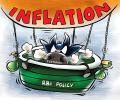
The Reserve Bank of India on Friday retained its projection for retail inflation at 4.5 per cent for the current fiscal assuming a normal monsoon, while emphasising that uncertainties related to food price outlook warrant a close monitoring. Consumer Price Index (CPI)-based retail inflation has been projected at 4.5 per cent with quarter-wise projections at 4.9 per cent in Q1 (April-June), 3.8 per cent in Q2, 4.6 per cent in Q3, and 4.5 per cent in Q4.

Balance-level delinquencies in the credit card segment saw a 17 basis points (bps) year-on-year (Y-o-Y) rise in the quarter ending June 2024 (Q1FY25). In all other credit segments, including personal loans, delinquencies declined even as retail credit growth moderated, consequent to banks tightening the supply of credit to the unsecured segments, a report by TransUnion CIBIL said on Monday. Data shows that balance-level delinquencies, measured in terms of 90 days or more past due, in the credit card segment stood at 1.8 per cent in Q1FY25- highest among all other credit segments.

From its highs over the past month, the stock of Procter & Gamble Hygiene and Healthcare fell 7 per cent before recovering this week. The stock has been an underperformer over the last year and has traded flat over this period.

The stock of online classified major Info Edge (India) was up over 6 per cent on Friday on expectations of demand improvement for Indian IT companies. Strong revenue growth prospects for each of its online verticals - including recruitment, matrimony, real estate, education, and upside from its holdings in companies such as Zomato - had prompted Goldman Sachs to upgrade the stock. Info Edge's standalone revenue grew 10.6 per cent year on year (Y-o-Y) in Q2FY25, beating consensus. 99acres (+16.9 per cent Y-o-Y) and Jeevansathi (+33 per cent Y-o-Y) were drivers of growth while recruitment grew 8.5 per cent Y-o-Y.

French wine and spirits maker Pernod Ricard expects to report low double-digit growth in India in the medium-term on the back of a strong premiumisation trend emerging in the country. "We are now the second market worldwide for Pernod Ricard and India continues to be a big growth engine for the group. "Our compoun annual growth rate (CAGR) over the past five years was 8 per cent, which is robust and was maintained at a rather high level," said Jean Touboul (pictured), chief executive officer, Pernod Ricard India.

From its recent lows, the stock of consumer major Marico is up 7 per cent on the back of a better-than-expected June quarter performance and robust outlook. In a pre-quarter update, the management indicated that domestic volume growth should witness an improvement in FY25, while other segments (growth portfolio, international business) too would see traction going ahead. The near-term trigger is strong sales and operating performance for Q1FY25.

The value of private equity (PE)-backed mergers and acquisitions (M&As) in India reached a six-year low during the first seven months of the current calendar year, amid ongoing global uncertainties. The total value of these deals stood at $6.2 billion during the period, down from $9 billion in the same period last year, and lower than the $14 billion recorded during the corresponding period in 2019, according to data from LSEG Deals Intelligence. PE funds pool capital from investors, including high-net-worth individuals, to invest in high-return opportunities.

Competition Commission of India on Wednesday said it has approved the merger of the media assets of Reliance Industries and Walt Disney Co to create the country's largest media empire. The deal, announced six months ago, has been cleared by the CCI with certain modifications proposed by the two parties.

Indian companies are generating more cash than ever. The net cash flow from listed firms' operations hit a new high of Rs 11.1 trillion in financial year 2023-24 (FY24), crossing the Rs 10-trillion mark for the first time, according to the Centre for Monitoring Indian Economy (CMIE) data going back to 1990-91. The FY24 figure represents a 19.3 per cent jump over the previous year, even as quite a few companies are yet to release their numbers.

The industry is expecting double-digit growth on a year-on-year basis, helped by a possible price correction after softening of raw material inputs and factors such as positive sentiments, pent up demand and improving economic conditions. Besides, a shift in consumer behaviour from price consciousness towards technologically advanced premium products with quality, value proposition and safety aspects leading to a rise in demand for home automation products is making the industry upbeat. With the government's production linked incentive (PLI) scheme for white goods, which has witnessed a committed investment of Rs 4,614 crore, in place, many manufacturers are gearing up to make the most out of the opportunity as well as take steps towards reducing their dependency on imports and make products more affordable.

'It is the responsibility of industry to take the very bright talent whose knowledge of software engineering basics is very high, and then give them additional skills.'

Leading FMCG companies reported a decline in margins in the September quarter on account of higher input costs and food inflation, which ultimately slowed down the pace of urban consumption. Rising prices of commodity inputs such as palm oil, coffee and cocoa were also accentuated and some FMCG firms have hinted at a price hike. HUL, Godrej Consumer Products Ltd (GCPL), Marico, ITC, and Tata Consumer Products Ltd (TCPL) have expressed concerns over squeezing urban consumption, which according to industry experts forms 65-68 per cent of FMCG total sales.

With the restart of economic activity, fraudsters have shifted their focus to target unsuspecting people from travel and leisure, communities (online forums) and logistics sectors, a report said.

India remains the largest growing economy in the world, a senior official from the International Monetary Fund said, observing that the country's macroeconomic fundamentals are good. "India is said to remain the largest growing economy in the world. We project growth at seven per cent in FY24-25, supported by recovery in rural consumption, as there have been favourable harvests.

TCS's mcap crossed $100 billion in 2018, 13.5 years after the IPO. It took only four more years to double its mcap to $200 billion.

'In terms of incentives, if you think about it, hybrids are a 20-year-old technology.'

Fast-moving consumer goods (FMCG) companies anticipate sustained volume pressures in the January-March quarter (Q4) coupled with sluggish rural growth during the period. Brokerages estimate top-line growth to be in low single digits in the quarter. Also, the late onset of winter had an impact on demand for winter products which range from moisturisers to hot beverages.

India Inc is not in the dark about moonlighting employees. According to a forensic accountant, companies can easily turn to experts and deploy digital tools that can be used to check if an employee is doing a second job or not - reaffirming fears of many who are wary of the practice in the context of the recent sacking of moonlighters by IT major Wipro. Arpinder Singh, global markets and India leader, forensic and integrity services, EY, said that EY had been involved with several companies to gauge moonlighting.

What is digital house arrest? It is a tactic cybercriminals use to confine victims to their homes and scam them, explains Tamal Bandyopadhyay.
IT services major HCL Technologies (HCLTech) on Monday reported a 10.51 per cent increase in consolidated net profit to Rs 4,235 crore in July-September quarter of FY25, as the company raised the lower band of its growth guidance on the back of better-than-expected performance. The Noida-headquartered firm had posted a net profit of Rs 3,832 crore in the year-ago period. HCLTech increased the lower band of its revenue growth guidance to 3.5-5 per cent year-on-year in constant currency, against a guidance of 3-5 per cent in the first quarter.

The stock of United Spirits, the country's largest liquor company by market capitalisation (mcap), has gained 11 per cent over the past week on double-digit growth guidance, rising premiumisation trend, operationally in-line performance in the March (Q4FY24) quarter and a rally in consumer stocks. The revenue growth of the company came in at 7 per cent year-on-year (Y-o-Y) mirroring the growth of the prestige and above (P&A) segment. This segment comprising premium brands accounts for 88 per cent of the revenues.

Trumponomics, poor growth, and high valuation certainly don't make a bullish recipe for Indian markets, warns Debashis Basu.

AI and machine learning will only continue to grow in 2022, with a significant increase in the demand for such roles, notes Sekhar Garisa, CEO, Monster.com.

The Reserve Bank of India's (RBI's) caution on inflation, highlighted during the recent monetary policy meeting, may put investors' faith in fast moving consumer goods (FMCG) stocks to test, analysts said. They, however, believe FMCG stocks may ride through this near-term investor anxiety as related companies are, typically, well-equipped to handle inflation due to their pricing power and steady demand for essential goods.

Digital canvassing is expected to benefit from political money looking for alternative blow horns.

'I tell young entrepreneurs if you don't have a great idea, if you don't have a good business model, don't think of a start-up.'

As the job markets open up, top IT services firms may look at a tiered strategy in which they hire entry-level talents at higher salaries, amid a major technological shift, say HR analysts.

After four years of high double-digit growth in profits, corporate earnings of Indian companies hit a speed bump in the April-June quarter of 2024 (Q1FY25), leading to the risk of a downward revision in India Inc profit estimates for FY25 and volatility in the equity market. Earnings growth slowed despite companies in most non-financial sectors reporting higher operating margins from lower commodity prices and a decline in interest costs.

Be always alert and watchful about what your kids are doing online. Instead of spying on them secretly, try to involve them in the process of keeping them safe from predators.

'The biggest near-term risk to Indian equities is the outflow of investments to China as tactical trades by foreign investors.'

Unified Payments Interface (UPI), the flagship payments platform of the National Payments Corporation of India (NPCI), touched a record high both in terms of volume and value of transactions in June after a slump in April and May. The platform recorded 2.8 billion transactions worth Rs 5.47 trillion in June, up 10.6 per cent in volume terms and 11.56 per cent in value terms over May. This is in sync with the opening up of the economy as Covid cases gradually came down from its peak in mid-May and lockdowns were eased in various places.

Humans will work far more collaboratively with artificial intelligence for rapid and complex decision-making.

Employers seek individuals who can prioritise tasks, solve problems, and work within deadlines, notes Ankit Aggarwal, founder and CEO, Unstop.

K Krithivasan, chief executive officer (CEO) and managing director (MD) of TCS, took home a salary of Rs 25.4 crore in 2023-24 (FY24), less than chief operating officer and executive director N Ganapathy Subramaniam. Krithivasan took charge as CEO on June 1, 2023.

Lack of clarity on data-sharing persists, public health experts sceptic about the pilot that was run in six Union territories as benchmark for national roll-out
 © 2026 Rediff.com - Advertise with us - Disclaimer - Privacy Policy - Sitemap - Feedback - About us - Terms of use - Grievances